- HubPages»
- Education and Science»
- Life Sciences»
- Entomology»
- Insects & Bugs
Butterflies - Spicebush Swallowtail Pictures and Plants
Spicebush Swallowtail on Homestead Verbena
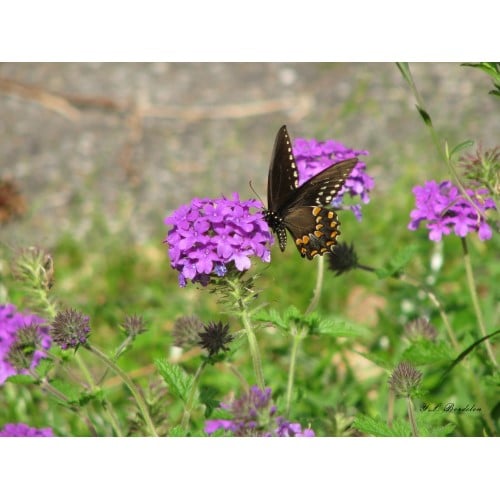
Beautiful Spicebush Swallowtail Butterflies
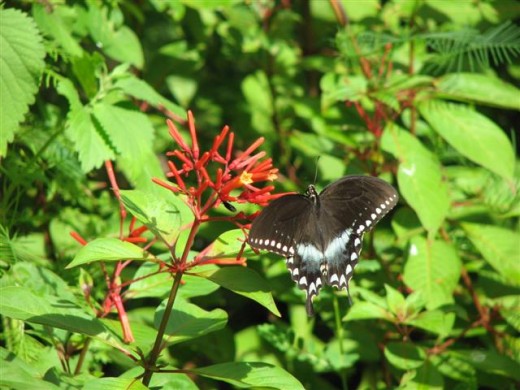
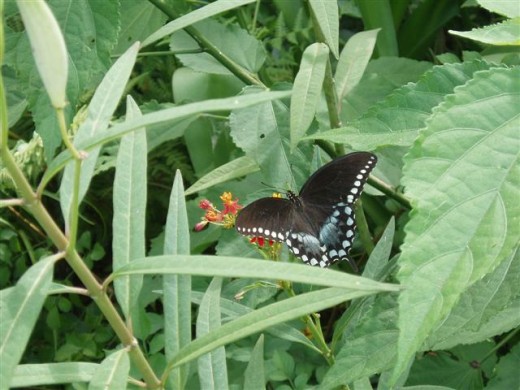
The Spicebush Swallowtail is an eastern butterfly, but it is more common down here in the south. It is often confused with the bad tasting Pipevine Swallowtail. This similarity in appearance is thought to be a survival adaptation. Male and female Spicebush Swallowtails are both beautiful, with the male having more bluish green color on its hind wings.
The caterpillars feed on members of the Laurel family (Lauraceae) which includes Spicebush, Sassafras, Camphor tree and Redbay. The adult butterflies use many flowering plants, but the favorites in our habitat seem to be Homestead Verbena, Old-fashioned Lantana, Butterfly Bush, Butterfly Weed, Jamaican Vervain and Salvia.
We have taken many pictures of both the Spicebush Swallowtail and the flowers that it visits. We hope you enjoy this article and that it helps you to attract the lovely Spicebush Swallowtail to your garden.
Telling the Black Swallowtails Apart
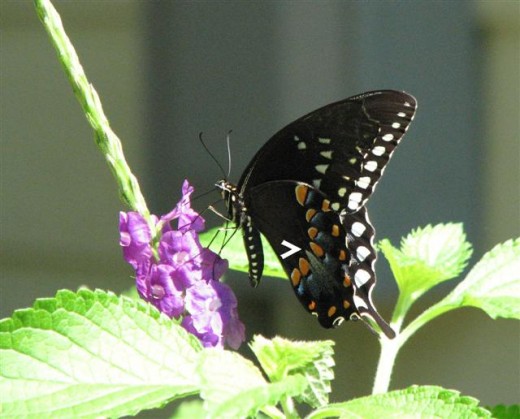
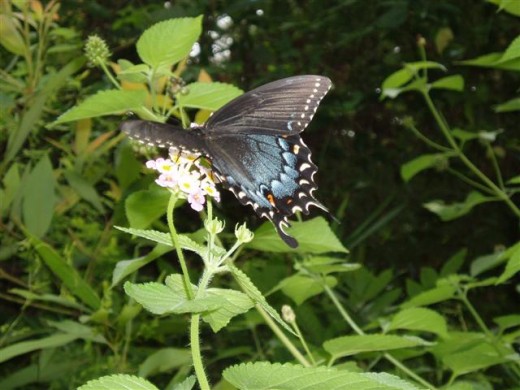
Identifying a Spicebush Swallowtail
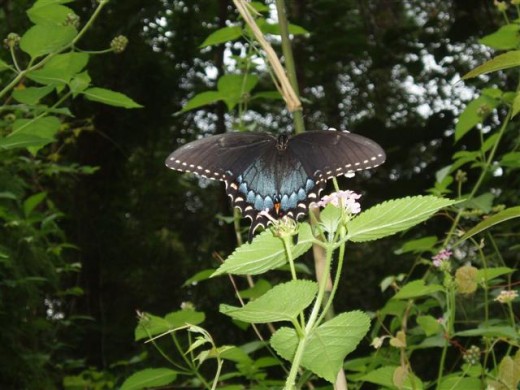
There are some key points in identifying a Spicebush Swallowtail and telling it apart from the many other black swallowtail butterflies, especially the Pipevine. As you can see in the picture, Spicebush swallowtails have a prominent greenish blue triangular spot on the hind wings and two rows of orange spots. The Pipevine Swallowtail only has one row of orange spots and no greenish blue triangular spot.
Pictures of Spicebush Larval Food Plants
Click thumbnail to view full-size


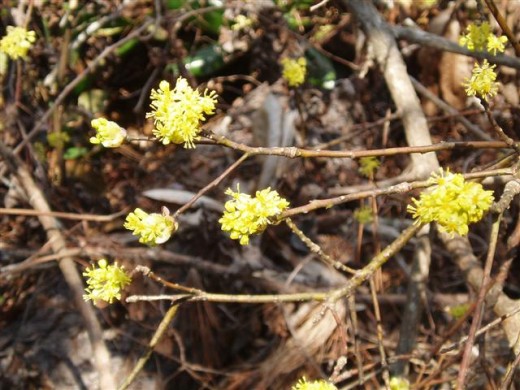
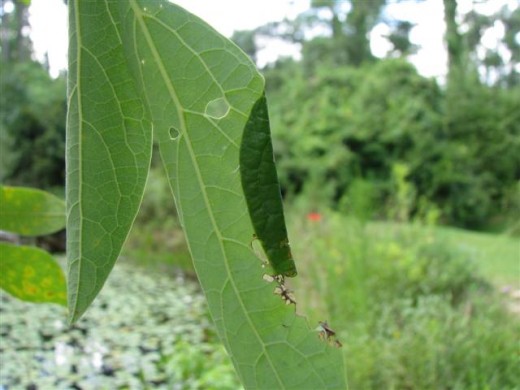
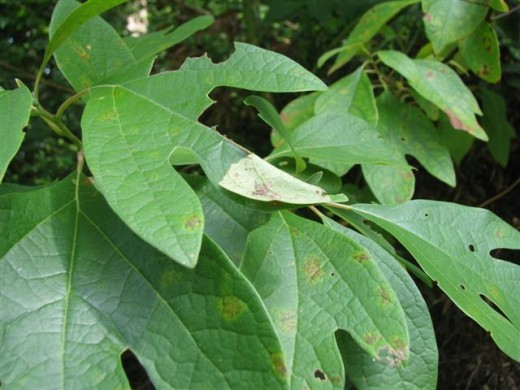
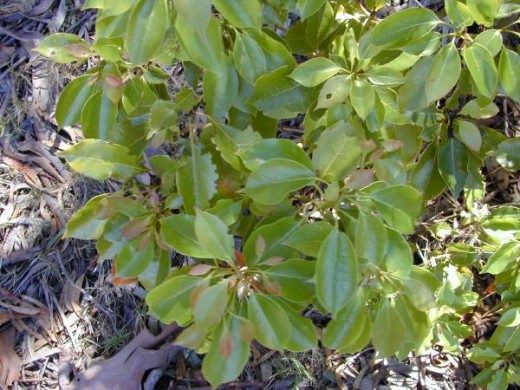
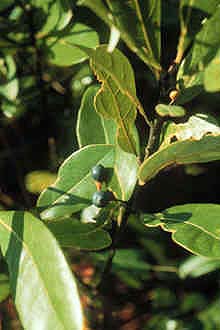
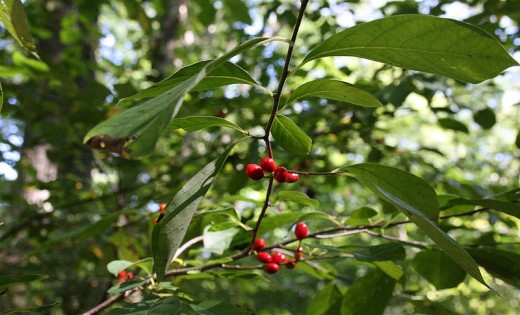
Spicebush Larval Food Plants
The best and most effective way to attract the Spicebush Swallowtail (and other butterflies) to your garden or yard is to plant as many of their larval food plants as possible. Some of the most used food plants of the Spicebush Swallowtail caterpillar are:
Spicebush, Lindera Benzoin
Common Spice Bush is also called Benjamin Bush, Spice Wood, Fever Bush, Snap Bush and Wild Allspice. This native tree or shrub grows to about 20 feet tall. The small, sweet smelling, yellowish flowers bloom before the leaves appear in spring. The shiny, red or sometimes yellow drupes are eaten by 24 species of birds. Rabbit and white-tailed deer nibble the leaves. It grows in moist or moderately moist soils.
Sassafras albidum
Sassafras also goes by the names, Ague Tree, Saxifrax Tree, White Sassafras, Sassafac, Cinnamon Wood, Smelling Stick, Saloop and Gumbo File. This native dioecious (male and female plants) tree can grow to 90 feet. All parts of the tree are aromatic and most have been used in herbal medicine or are eaten. In fall the leaves are harvested and dried to make "file", an ingredient in Cajun gumbo. The small greenish yellow flowers appear before the leaves come out in March or April in Louisiana. The black drupes and leaves are eaten by 28 species of birds as well as wild turkey, raccoons and squirrels. White-tailed deer, marsh rabbit and black bear eat the twigs. It does well in well drained soil and open areas.
Camphor tree, Cinnamomum camphora
Camphor tree is a native of Japan, China and Malaya. It has escaped cultivation and is now growing in many southern Louisiana parishes. Camphor tree grows to about 40 feet tall. Its wood is used to make commercial camphor.
Redbay, Persea borbonia and Swamp Red Bay, Persea palustris
There are many common names for these useful members of the Laurel family. They are called, Red Bay, Swamp Bay, Swamp Sweet Bay, Sweet Bay, Florida Mahogany, Tiss Wood, Isabella Wood, Silk Bay, Red Bay Persea and Laurel Tree. They are relatives of the Bay Laurel, bay leaves are used to season food. The leaves of the Red Bay can also be used as an herb.
Persea borbonia grows in sandy soil along the coast, while Persea palustris grows in moist areas and in baygalls in the pine regions of Louisiana.
Other members of the Laurel family (Lauraceae) are also used by spicebush swallowtails.
Spicebush on Coral Nymph Salvia coccinea
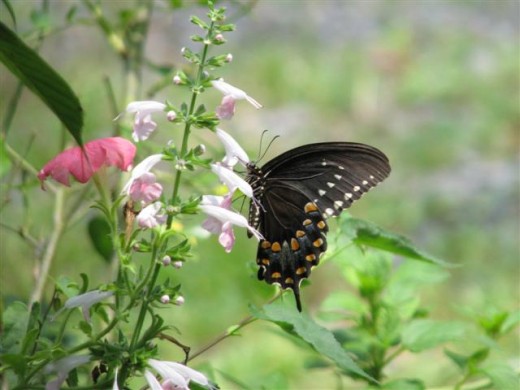
Butterfly Nectar Plants
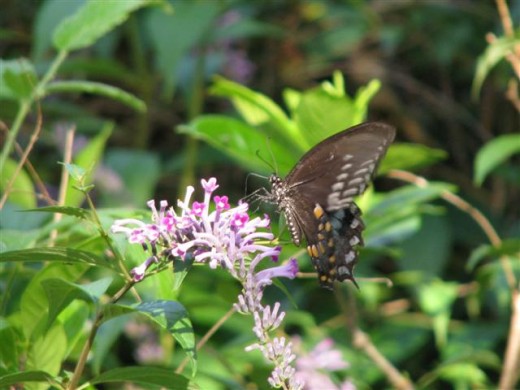
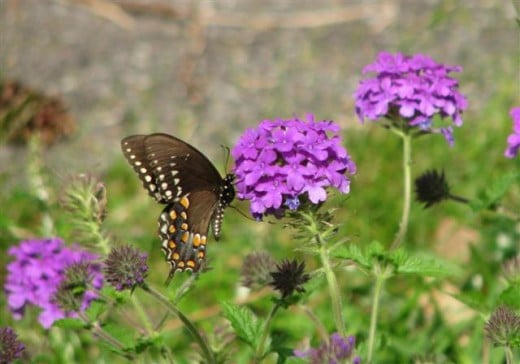
Good Nectar Plants
Flowering plants, rich in nectar are what the adults will use to sustain their life. These flowers also help to lighten the spirit of the human inhabitants. Most of these favorite butterfly plants require full sun to part shade. Shining or Lindley Butterfly Bush, a weeping Buddleia, is an exception. It actually prefers part shade with some morning sun. You will attract more butterflies if you have large stands of nectar-rich flowers.
Here is a short list of some of my favorite nectar plants.
- Salvia coccinea and other Salvia species
- Lindley (Buddleia lindleyana) and Other Butterfly Bushes, Buddleia spp.
- Homestead Purple Verbena
- Lantana spp.
- Butterfly Weed Milkweed, Asclepias spp.
- Jamaican Vervain,
- Mexican Fire Bush, Hamelia patens
- Petunias
- Morning Glory, Ipomoea spp.
- Zinnas
Black Swallowtail Emerging from Cocoon
Stokes Butterfly Book
Butterfly Poll
Do you plant to attract butterflies and moths to your yard?
Spicebush Swallowtail Butterfly
Butterfly Guide Books

Links to More About Butterflies & Moths
- Butterflies and Gardening to Attract Them
What is more beautiful than a garden full of colorful flowers with gorgeous butterflies flitting around? It's really not that hard to create a haven for the - Butterflies - Tiger Swallowtail
Pictures and information about how to attract Tiger Swallowtail butterflies to your yard. - Butterflies - Black Swallowtail
Pictures and information about the Black Swallowtail butterfly. - Butterflies - Gulf Fritillary
Photographs and information about Gulf Fritillary Butterflies. - Clearwing Hummingbird Moth
One may think there's a tiny little baby hummingbird flying among the flowers, but more than likely it's a Hummingbird Clearwing Moth.This moth will feed du
© 2011 Yvonne L. B.